What It Is, Symptoms, Treatment & Management
What does chronic pain feel like?
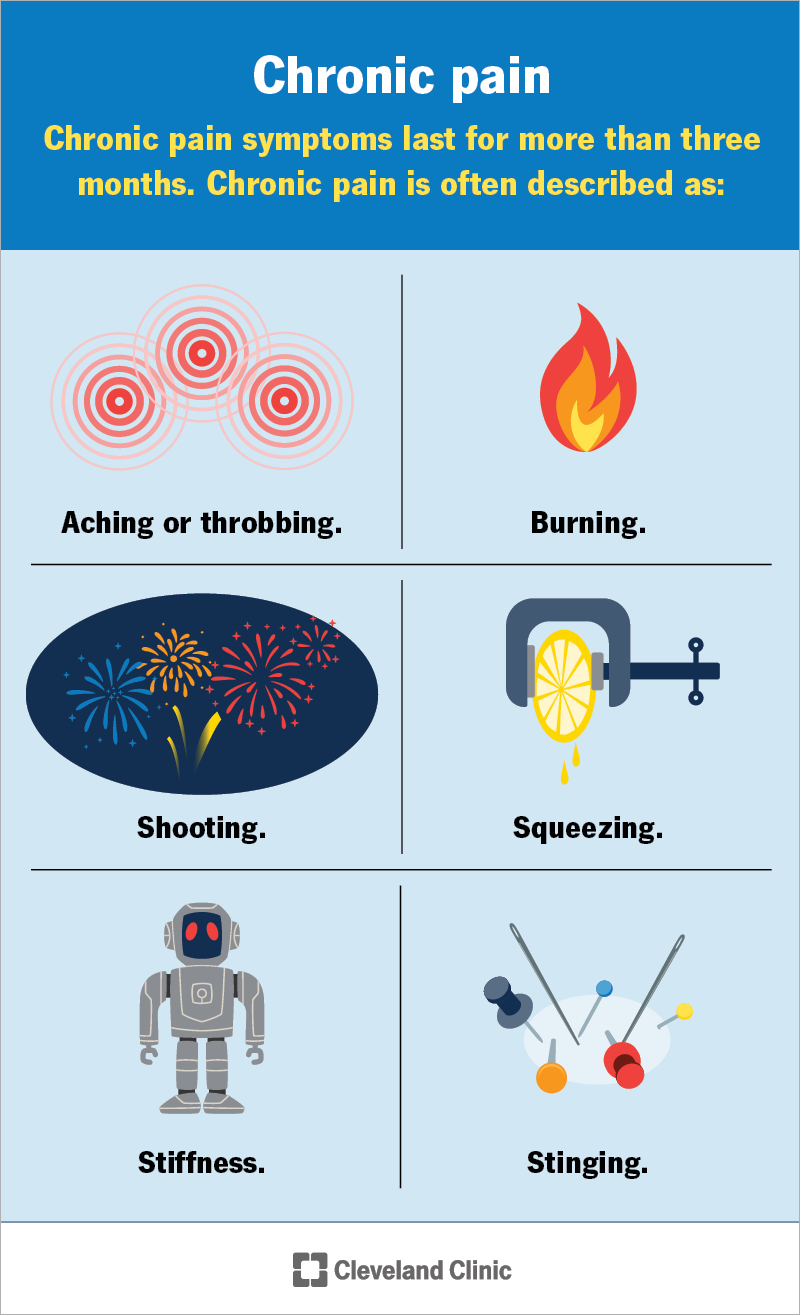
Chronic pain symptoms vary from person to person. But the defining characteristic of chronic pain is that it lasts for more than three months. You may describe the pain as:
- Aching.
- Burning.
- Shooting.
- Squeezing.
- Stiffness.
- Stinging.
- Throbbing.
Chronic pain often leads to other symptoms and conditions, including:
- Generalized anxiety disorder.
- Major depressive disorder.
- Fatigue, or feeling overly tired most of the time.
- Insomnia, or trouble falling asleep.
- Irritability or mood swings.
It’s important to see a healthcare provider if pain is interfering with your daily life.
What causes chronic pain?
Chronic pain is often very complex. Sometimes, it has an obvious cause — you may have a long-lasting condition like cancer or arthritis that leads to pain. Other times, it’s more difficult to find the underlying cause — or there may be several factors contributing to pain.
General types, or causes, of pain include:
- Neuropathic pain: This is nerve pain that can happen if your nervous system malfunctions or gets damaged. Examples include peripheral neuropathy, pinched nerves and trigeminal neuralgia.
- Musculoskeletal pain: This is pain that affects your bones, joints, ligaments, muscles and/or tendons. Musculoskeletal pain often results from injuries (like joint dislocation) or “wear and tear” over time (like tendonitis).
- Visceral pain: This type of pain stems from your organs, like your heart, lungs, bladder, reproductive organs and the organs in your digestive system. Visceral hypersensitivity may make it more likely that you have chronic visceral pain.
- Inflammatory pain: This type of pain happens in response to tissue damage and inflammation. Chronic conditions or short-term illnesses may cause this type of pain. For example, you may have an autoimmune condition like rheumatoid arthritis or lupus that causes chronic inflammation and pain. An infection like shingles can cause postherpetic neuralgia.
- Central sensitization: This type of pain results from changes that occur in your central nervous system. Over time, the changes make you more sensitive to pain and other sensations. Central sensitization can occur with any type of pain and can lead to other symptoms like sensitivity to lights, noises and emotions.
Some people also have chronic pain that’s not tied to a direct physical cause. This doesn’t mean that your pain isn’t real. Oftentimes, this type of pain (psychogenic pain) is related to changes in your nervous system and other understandable emotional and psychological factors.
It’s possible to have several causes of pain overlap. You could have fibromyalgia in addition to back pain from degenerative disk disease, for example.
What are the risk factors for chronic pain?
As many conditions or injuries can cause chronic pain, there are several risk factors for it. In general, some risk factors include:
- Genetics: Some chronic pain causes, like migraines and rheumatoid arthritis, run in biological families (are genetic).
- Aging: As you age, your risk for developing chronic pain increases, especially “wear and tear” causes of chronic musculoskeletal pain.
- Previous injury: If you’ve had a traumatic injury, you’re more likely to develop chronic pain.
- Having a manual labor job: If you have a physically strenuous job, you’re at greater risk for developing chronic pain.
- Frequent or severe stress: Studies show that chronic pain is connected to both frequent stress and post-traumatic stress disorder.
- Smoking: People who smoke are nearly three times as likely to get lower back pain. And smoking may increase pain sensitivity in general.
- Obesity: Having obesity can worsen certain health conditions that cause pain, like arthritis, as there’s extra pressure on your joints.
link