What Your Sleep Profile Reveals about Your Health
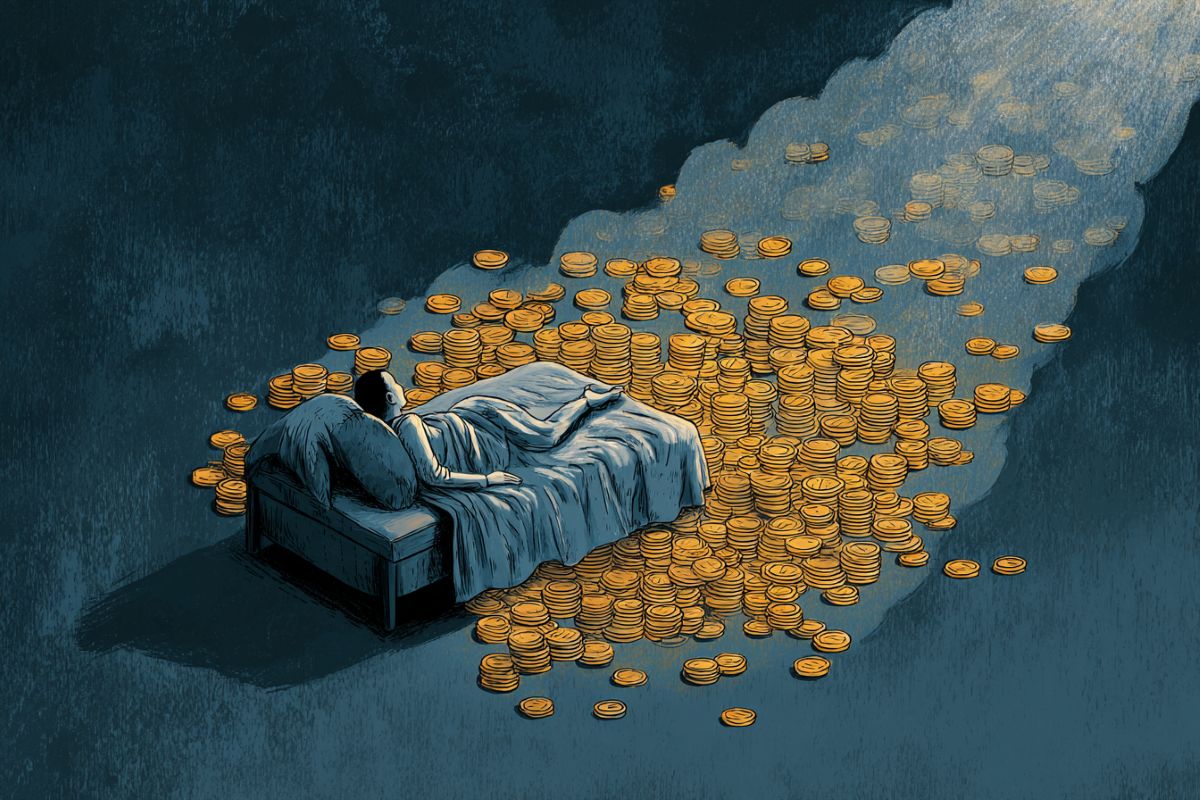
A night of solid rest can feel like a panacea. The quantity and quality of our sleep influence our physical health, our moods, our cognition and our ability to function in almost every aspect of life. Good sleep seems to improve all these measures, and bad sleep takes a significant toll. Yet sleep can’t be divided into such a simplistic binary—researchers are coming to understand that it’s more complicated.
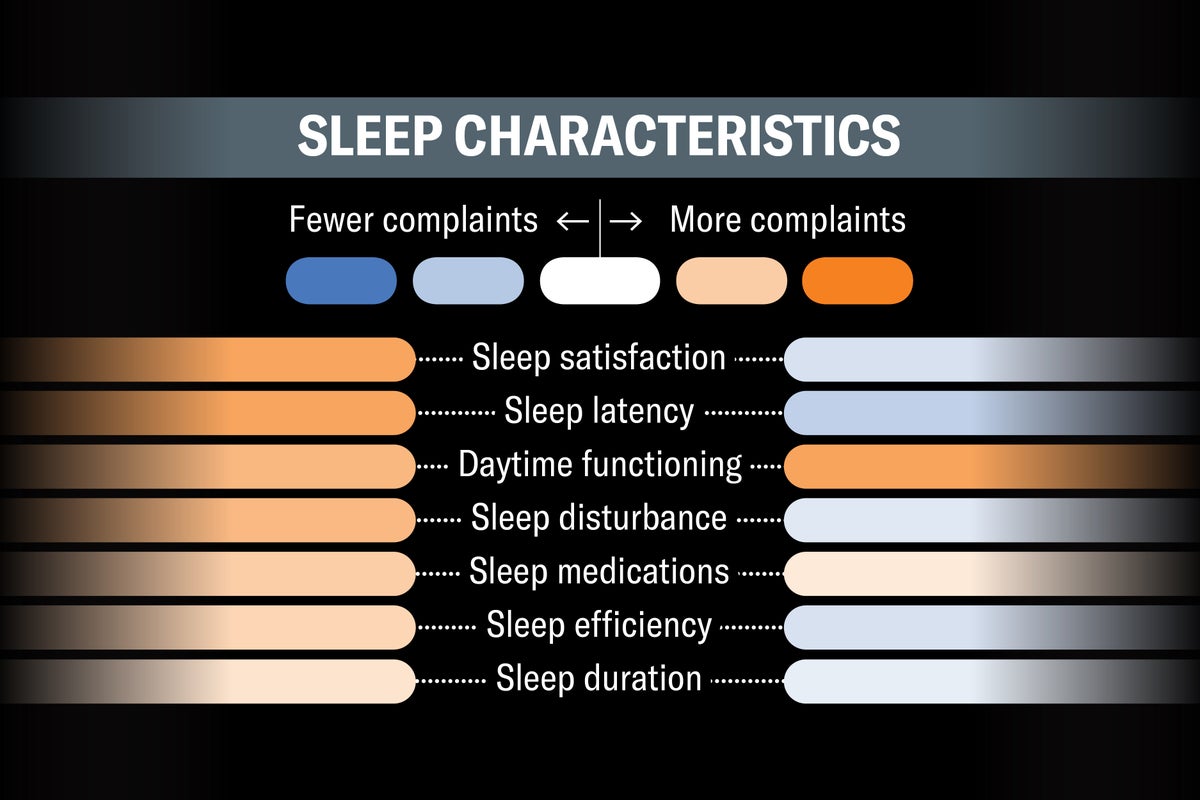
In a recent study, scientists analyzed brain scans and data on how shuteye affects many different measures of health. The dataset is based on self-reports from 770 healthy young adults. The researchers used statistical analysis to show that the complex relation between sleep and health can be boiled down to five different profiles that describe how certain patterns of sleep are associated with changes in various aspects of our biological, physical and social lives. “You’re not either one or the other of these profiles,” says study co-author Valeria Kebets of Concordia University in Montreal. “We all express these profiles to a certain degree at some point in our lives.” The researchers also emphasized that causality goes both ways: sometimes bad sleep damages our health, but problems in our lives and bodies can also cause sleep cycles to suffer.
The profiles point to ways to improve sleep and health. Taking sleeping pills may hamper your memory, for instance, but could benefit your social relationships. And sleeping for at least six to seven hours a night might boost your cognitive performance and diminish your aggression. “Sleep is very individual,” Kebets says. “But there are some things that can definitely improve sleep.” These factors include going to bed at around the same time every night, following a set bedtime routine, and not consuming alcohol right before you try to sleep.
On supporting science journalism
If you’re enjoying this article, consider supporting our award-winning journalism by subscribing. By purchasing a subscription you are helping to ensure the future of impactful stories about the discoveries and ideas shaping our world today.
PROFILE 1: GENERALLY POOR SLEEP
This profile shows that worse sleep is related to worse mental health. People who take a long time to fall asleep, who wake up often and who don’t sleep for very long tend to be more anxious and more depressed and to have more intrusive thoughts.
PROFILE 2: SLEEP RESILIENCE
This profile applies to people who may have mental health concerns, especially issues with focusing and ADHD, but report no sleep complaints. It shows that psychological problems aren’t always associated with poor sleep.
PROFILE 3: SLEEP AIDS
This association reveals that taking sleep aids, including prescription drugs, CBD, teas, or any other soporific, is related to worse episodic memory and emotional recognition. Interestingly, though, people who take sleep aids tend to feel more satisfied with their social relationships and support system.
PROFILE 4: SLEEP DURATION
A lack of sleep—specifically, getting less than six to seven hours a night—is linked to worse cognitive performance. People in this profile reported issues with problem-solving, emotional processing, language tasks and social cognition. They also felt less agreeable and more irritable.
PROFILE 5: DISTURBANCES
Those who report disturbed sleep, such as multiple awakenings, breathing issues and uncomfortable body temperatures, also say they experience mental health symptoms such as increased anxiety and depression, substance use and more aggressive behavior. They also have trouble with memory and language tasks.

Jen Christiansen; Source: “Identification of Five Sleep-Biopsychosocial Profiles with Specific Neural Signatures Linking Sleep Variability with Health, Cognition, and Lifestyle Factors,” by Aurore A. Perrault et al., in PLoS Biology, Vol. 23; October 2025 (data)
It’s Time to Stand Up for Science
If you enjoyed this article, I’d like to ask for your support. Scientific American has served as an advocate for science and industry for 180 years, and right now may be the most critical moment in that two-century history.
I’ve been a Scientific American subscriber since I was 12 years old, and it helped shape the way I look at the world. SciAm always educates and delights me, and inspires a sense of awe for our vast, beautiful universe. I hope it does that for you, too.
If you subscribe to Scientific American, you help ensure that our coverage is centered on meaningful research and discovery; that we have the resources to report on the decisions that threaten labs across the U.S.; and that we support both budding and working scientists at a time when the value of science itself too often goes unrecognized.
In return, you get essential news, captivating podcasts, brilliant infographics, can’t-miss newsletters, must-watch videos, challenging games, and the science world’s best writing and reporting. You can even gift someone a subscription.
There has never been a more important time for us to stand up and show why science matters. I hope you’ll support us in that mission.
link