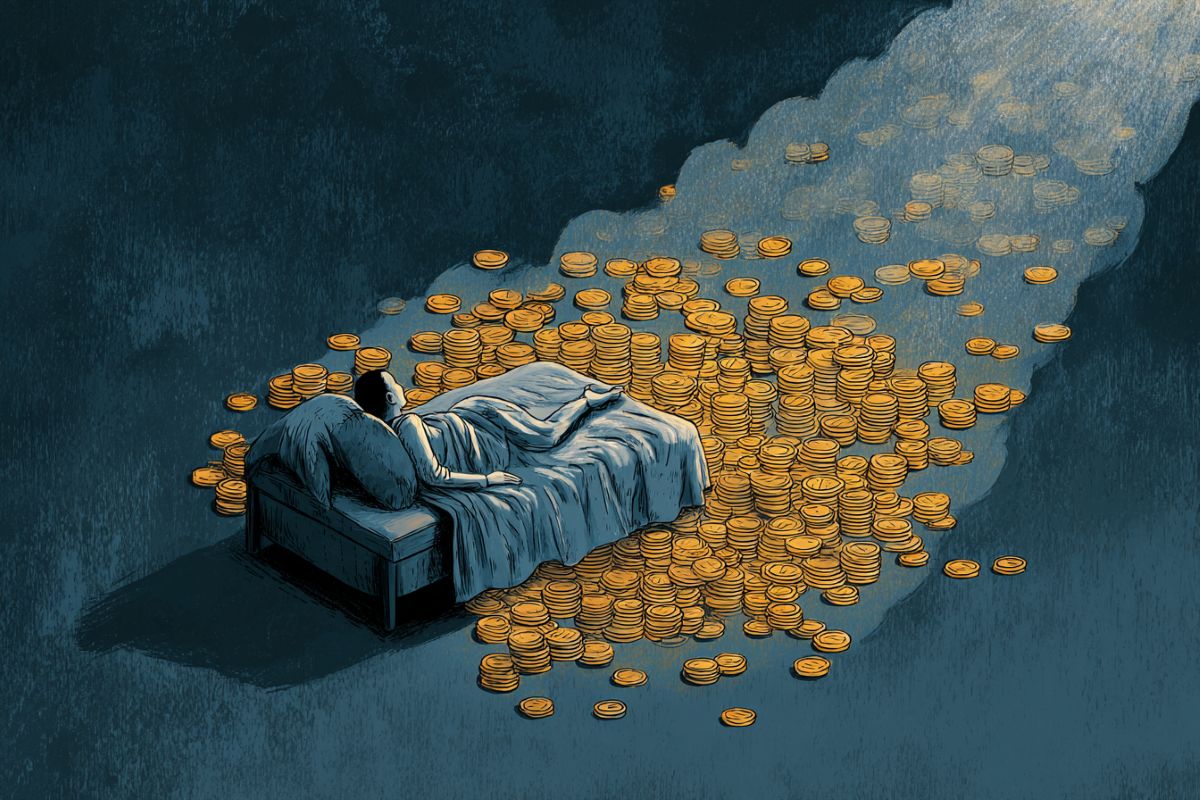
Bruce Tammelin, MD, outlines what happens if you don’t get quality sleep: “You can either have anxiety or depression”
A large percentage of Americans are getting insufficient sleep and exposing themselves to a range of adverse health outcomes, experts warn.
Per a 2015 joint consensus statement by the American Academy of Sleep Medicine and the Sleep Research Society, adults “should sleep 7 or more hours per night on a regular basis to promote optimal health”.
However, nearly 37% of American adults are falling short of that minimum nightly rest, according to the results of a 2022 survey carried out by the U.S.’s Centers for Disease Control and Prevention (CDC).
How can insufficient sleep damage your health?
Both mentally and physically, regularly deficient sleep can take a significant toll on a person’s well-being.
- Effects on physical health
According to the Sleep Foundation’s Rob Newsom and Dr. Abhinav Singh, a consistent lack of sleep may leave you more vulnerable to physical-health issues such as heart disease, obesity and diabetes.
Why is this?
Per the National Institutes of Health (NIH), sleep “heals and repairs your heart and blood vessels”. An effective night-time rest also plays a role in regulating your blood-sugar levels: if they’re increased by consistently deficient sleep, this can lead to a higher risk of diabetes.
Meanwhile, an increased exposure to obesity is, in part, linked to sleep’s role in managing the hormones that control your appetite. A lack of sleep can make you feel hungrier, potentially leading to weight gain.
Insufficient sleep, say Newsom and Dr. Singh, can also reduce the effectiveness of your immune system. This can make you more likely to pick up illnesses such as the common cold.
- Effects on mental health:
If you don’t get enough sleep, you may suffer from impaired cognitive skills. “Sleep helps your brain work properly,” explains the NIH. “While you’re sleeping, your brain is getting ready for the next day. It’s forming new pathways to help you learn and remember information.”
Without sufficient sleep, you may not be able to think as clearly and your reaction times may be slower – a state of affairs that can have an obvious knock-on effect on your performance in your job or studies.
It’s also particularly dangerous if, for example, you’re behind the wheel of a car. “Reductions in attention make a sleep-deprived person more prone to mistakes,” Newsom and Dr. Singh warn.
Meanwhile, Bruce Tammelin, the medical director of the Providence St. Joseph Hospital Sleep Disorders Center, highlights further mental-health issues that can arise from the impaired brain function that deficient sleep can cause.
“If you don’t get highly efficient and unfragmented sleep, you can either have anxiety or depression,” Tammelin told an interview with Very Well Health this week.
In his book Why We Sleep: The New Science of Sleep and Dreams, the Berkeley neuroscience and psychology professor Matthew Walker agrees: “Sleep disruption contributes to all major psychiatric conditions, including depression, anxiety and suicidality.”
What’s more, adverse mental health can contribute to insomnia, fostering a vicious cycle of inadequate sleep and poor psychological well-being.
“It’s becoming increasingly clear that sleep and mood have a bidirectional relationship,” says Andrea Goldstein-Piekarski, the director of Stanford Medicine’s Computational Psychiatry, Neuroscience, and Sleep Laboratory.
“The shorter your sleep, the shorter your life span”
Overall, Walker concludes in Why We Sleep, it’s clear to see why the CDC has gone as far as referring to deficient sleep as a public-health epidemic.
Tot up all the negative health outcomes associated with a regular lack of sleep, he declares, and “a proven link becomes easier to accept […]. The shorter your sleep, the shorter your life span.”
He adds: “The old maxim ‘I’ll sleep when I’m dead’ is therefore unfortunate. Adopt this mind-set, and it is possible that you will be dead sooner and the quality of that (shorter) life will be worse.
“The elastic band of sleep deprivation can stretch only so far before it snaps.”
Related stories


Get your game on! Whether you’re into NFL touchdowns, NBA buzzer-beaters, world-class soccer goals, or MLB home runs, our app has it all.
Dive into live coverage, expert insights, breaking news, exclusive videos, and more – plus, stay updated on the latest in current affairs and entertainment. Download now for all-access coverage, right at your fingertips – anytime, anywhere.
link